
Stock markets this week would take cues from global trends, the announcement of domestic macroeconomic data such as GDP numbers and foreign fund movement, analysts said. Besides, monthly auto sales and Purchasing Managers' Index (PMI) data for manufacturing and services sectors would also influence trading in the market, they added. Benchmark BSE Sensex tumbled 1,538.64 points or 2.52 per cent last week amid concerns that the US Federal Reserve might raise interest rates further to curb inflation.

'...and defensive until the global macro headwinds turn more benign.'

Foreign portfolio investors (FPIs) have withdrawn over Rs 12,000 crore from Indian equities this month so far, mainly due to a sustained rise in US bond yields and the uncertain environment resulting from the Israel-Hamas conflict. However, the story takes an intriguing turn on observing FPI activity in Indian debt as they have infused over Rs 5,700 crore into the debt market during the period under review, data with the depositories showed. Going ahead, the trajectory of FPIs' investments in India will be influenced not only by global inflation and interest rate dynamics but also by the developments and intensity of the Israel-Hamas conflict, Himanshu Srivastava, associate director - manager research, Morningstar Investment Adviser India, said.

'Continue with your SIPs to get the benefit of lower average prices in this challenging market environment.'

NSE Nifty, after shuttling between 10,809.60 and 10,725.90, finished 30.95 points, or 0.29 per cent lower at 10,741.10.

Indian equity markets have a limited upside potential in the near-term as they negotiate the ensuing cyclical slowdown, wrote analysts at Nomura in a recent coauthored report led by Saion Mukherjee, their managing director and head of equity research for India. He, however, believes that the foundations are in place for sustainable growth over the medium-to-long term, and hence suggests a 'buy on dips' strategy to equity investors. As an investment strategy, Nomura prefers domestic-oriented sectors and companies over exporters, and prefers stocks that provide valuation comfort. Industrials and banks are their overweight sectors, while IT services and consumer discretionary are their underweight sectors.

The rally in PSBs, analysts feel, was more a knee-jerk reaction to the development, and the actual benefits will start to accrue once the addition takes place in 2024. "The actual benefit for banks from the inclusion in JP Morgan's EM Index will accrue from June 2024 onwards. "Until then, the larger fundamentals of the market will dictate the moves. "Once the initial euphoria subsides, bond markets will look to global cues which may trigger fresh selling," said Siddharth Khemka, head of retail research, Motilal Oswal Financial Services.

Bucking the overall downtrend, shares of RIL rallied nearly 10 per cent, capping the Sensex loss to a large extent.

Many investors want to exit equities now and re-enter when they begin to rise. Such timing is difficult to pull off.

The broader NSE Nifty gained 22 points to 10,480.60

Strong macroeconomic headwinds causing turbulence in the $245-billion Indian IT industry are yet to calm down. Top Indian IT services companies are likely to post a decline or just marginal growth in sequential revenue in Q1FY24 because of a soft discretionary spending environment. Though the first quarter is seasonally strong for IT firms, "June 2023 will be an exception", according to analysts at Kotak Institutional Equities.

Analysts expect the indices to dip further if the global macros do not stabilise

The sharp rally in the midcap stocks has made valuations expensive, and there is room for a correction, wrote Christopher Wood, global head of equity strategy at Jefferies in his latest note to investors, GREED & fear. The midcap index, Wood said, now trades at 24.1x 12-month forward earnings compared with 18.7x for the Nifty. Rising crude oil prices, he believes, are another worry for India, which imports nearly 80 per cent of its annual crude oil requirement.

Tata Steel was the biggest gainer in the Sensex chart, rising 2.39 per cent, followed by Tata Motors, Power Grid, Reliance Industries, UltraTech Cement, NTPC, Nestle, HUL, Mahindra & Mahindra, Wipro, Kotak Mahindra Bank and Asian Paints. In contrast, Bajaj Finance, IndusInd Bank, Axis Bank, Bharti Airtel, Bajaj Finserv, ICICI Bank, Infosys and Titan were among the laggards.

Domestic macroeconomic data, RBI policy and developments related to the Russia-Ukraine war would be major driving factors for the stock market this week, analysts said. Moreover, FPI investment and trends in crude oil would also influence the trading sentiment, they added. "This week, the RBI credit policy will be a critical factor for Indian markets.

India appears poised to sustain its growth in a more durable way than before with the economy carrying the momentum from FY23 into the current fiscal year, the Annual Economic Review for 2022-23 released by the finance ministry on Thursday said. However, the report cautioned that escalation of geopolitical stress, enhanced volatility in global financial systems, sharp price correction in global stock markets, a high magnitude of El-Nino impact, and modest trade activity and FDI inflows, are factors that could constrain the pace of growth. "Should these developments deepen and dampen growth in the subsequent quarters, the external sector may challenge India's growth outlook for FY24," the finance ministry said.

Krithi Krithivasan is the kind of person one might look to when the need is to calm things down and put things back on track.

Stock markets will be guided by global factors such as the Russia-Ukraine war, the COVID-19 situation in China and crude oil prices in absence of major domestic events this week, analysts said. Stock markets are expected to keep their winning momentum this week as FIIs may come back aggressively fuelling a further rally in the market, they added. "In absence of any major event, global cues viz the Russia-Ukraine war, the COVID situation in China and movement of crude will remain in focus. "Besides, participants will be also be eyeing FIIs flow for cues," said Ajit Mishra, VP Research, Religare Broking.

India, along with Southeast Asian countries such as Indonesia, is expected to sustain growth in the medium-term in Asia region, replacing China as the key growth driver, Morgan Stanley and Nomura said in two separate reports released on Monday. While Morgan Stanley projected a 6.2 per cent gross domestic product (GDP) growth forecast for India in FY24, Nomura estimated the Indian economy to grow at 5.9 per cent in 2023. "Even with a slowing China, we expect GDP growth in Asia to sustainably outperform other emerging markets and the US. India and Southeast Asia are set to be the fastest-growing economies this decade.

Major global indices - the Nasdaq, Bovespa, Seoul Composite, S&P 500, Dow Jones, S&P BSE Sensex, NYSE, DAX, Nikkei and, CAC 40 - have all gained 37 per cent to 75 per cent since their respective March 2020 low.

The sharp rally in the markets thus far in fiscal 2023-24 (FY24) has left analysts struggling to find investment-worthy themes. The S&P BSE Sensex has surged nearly 7 per cent thus far in FY24 and hit a fresh 52-week high of 63,601.71 levels on June 22, mostly led by foreign institutional (FII) flows. "The Indian market has seen a broad rally in the past few months but headline indices have seen more modest performance. "We are not very clear about the reasons for the rally and the divergent performance and struggle to find ideas in the consumption, investment and outsourcing sectors after the sharp run-up in several of our favored sectors and stocks in the past two months," wrote Sanjeev Prasad, co-head, Kotak Institutional Equities, in a recent co-authored note with Anindya Bhowmik and Sunita Baldawa.

The brokerage said the consolidated fiscal deficit, including that of the Union (3.6 per cent), the states (2.6 per cent) and the off-budget borrowings which are being resorted to increasingly is a worry.
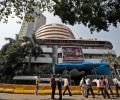
Investors will keenly watch out for the Futures & Options expiry for July on Thursday

'We suggest an equity strategy of 5% to 10% exposure to cash, 5% to Gold ETF, close to 50% to Sensex/Nifty/large mid-cap stocks.'

Domestic equity markets are likely to see volatility in a range-bound trade this week amid geopolitical worries and growing expectations of a sharp hike in interest rates, analysts said. Global trends, inflation data and the last batch of quarterly earnings will drive the markets this week, they said. Besides, the rupee movement, FII investment pattern and Brent crude trends would also be watched by investors.

Prime Minister Narendra Modi on Saturday announced the adoption of the New Delhi Leaders Declaration, a significant victory for India's G20 presidency that came amid increasing tensions and divergent views over the Ukraine conflict.

Equity and oil markets can breathe easy for now, as the developments in Russia are unlikely to trigger a runaway rally in crude oil prices, said analysts. India, which imports nearly 80 per cent of its crude oil requirement, has been dependent on cheap Russian oil over the past few months to keep inflation - a sore point for the equity markets - in check. For the Indian markets that are expected to remain volatile amid these developments, analysts believe, the progress of monsoon, fund flows - both foreign institutional investor (FII) and domestic - and the upcoming corporate earnings season back home remain key.

Sun Pharma was the best gainer among Sensex components, surging 6.91 per cent

After a sharp outperformance in the mid-and small-cap segments in the first half of calendar year 2023 (H1-CY23), analysts are now turning cautious on these two market segments and suggest investors stay selective and look for valuation comfort and earnings visibility before investing. The S&P BSE Midcap index has surged 13.7 per cent in H1-CY23, and the S&P BSE Small-cap index gained 12.7 per cent during this period, data shows. The S&P BSE Sensex, in comparison, has moved up 6.4 per cent.

Logistic players have seen a sharp correction at the bourses over the past six months as intense competition from new-age-tech startups, higher freight rates, and weak macros dented listed players' growth outlook. Analysts warn that the emergence of tech-based startups could weigh on organised players' profit-pool, and can potentially erode their market share. Thus, a stock-specific strategy would be prudent at this juncture with focus on companies that are rapidly innovating and investing in technology.

The wider NSE Nifty touched a low of 10,652.40 before finishing at 10,671.40, showing a loss of 97.75 points, or 0.91 per cent.
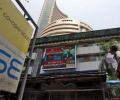
Analysts believe that investors should look at stocks that hit 52-week lows only if they have a dividend paying track record, are debt-free and have sound fundamentals.
'As China's reopening euphoria fizzled out on the back of some disappointing economic data, we saw inflows coming back to India with full force in the past 3-4 months.'

Foreign portfolio investors (FPIs) infused Rs 11,630 crore in the Indian equity markets in April on the reasonable valuation of stocks and appreciation in the rupee. This came after FPIs infused a net sum of Rs 7,936 crore in equities in March, mainly driven by bulk investment in the Adani Group companies by the US-based GQG Partners. However, if one adjusts for the investments of GQG in Adani Group, the net flow was negative.

Small stocks of Dalal Street grappled with turbulent times in 2022 as high volatility and higher interest rate regime sapped investors' appetite for these scrips but the horizon ahead seems less cloudy for the New Year. While the 30-share Sensex scaled multiple record peaks with bluechips glittering, small stocks underperformed and the BSE smallcap index declined more than 3 per cent this year. In comparison, the BSE Sensex climbed 2,673.61 points or 4.58 per cent till December 27.

Li also had a difficult meeting with some of the Western leaders on the sidelines, especially Italian Prime Minister Giorgia Meloni, who has signalled Italy's resolve to quit China's famed Belt and Road Initiative for its failure to bring the expected results to Rome.

Tech Mahindra was the top gainer in the Sensex pack, rising around 4 per cent, followed by HDFC, Infosys, Bajaj Finserv, Asian Paints and Bajaj Finance. Nifty rose 229.15 points to 18,102.75.

The US Fed interest rate decision, domestic macroeconomic data announcements and ongoing quarterly earnings are some of the major factors that will drive the stock markets in a holiday-shortened week, analysts said. Besides, monthly auto sales numbers and the LIC IPO will also remain in focus, they added. Equity markets will remain closed on Tuesday for Id-Ul-Fitr (Ramzan Id). "The market is likely to kick off this week on a sombre note after a sharp fall in the US market then the focus will shift to the outcome of the US FOMC meeting, which is crucial amid record inflation and growth worries.

The Fed interest rate decision, domestic macroeconomic data announcements and quarterly earnings will be the major sentiment drivers for the equity market in a holiday-shortened week ahead, analysts said. Investors will also take cues from the monthly auto sales numbers to be announced on Monday. Equity markets will remain closed on Thursday for Diwali Laxmi Pujan and on Friday for Diwali Balipratipada.

As part of a cost-cutting plan, the bank is now dismantling its stock broking, equity research, and equity listing desks worldwide.
 © 2026 Rediff.com - Advertise with us - Disclaimer - Privacy Policy - Sitemap - Feedback - About us - Terms of use - Grievances